The role of quality management at Ridgecrest Regional Hospital is to support the healthcare team as they continue to strive to improve their processes of healthcare delivery. Our quality team monitors and evaluates trends within the hospital and focuses on the needs of our patients, and improving our patients’ experiences. Our team also reviews current systems and processes in order to stay compliant with established standards and guiding principles.
Our quality management department is headed by registered nurse Brenda Diel, MS, RN, and includes representatives from Safety, Compliance, Risk Management, and Patient Advocacy.
Medicare & Medicaid Compliant
The Centers for Medicare & Medicaid Services (CMS) implemented quality initiatives such as quality measures, to assure quality health care for Medicare Beneficiaries through accountability and public disclosure. Quality measures are tools that help us measure or quantify healthcare processes, outcomes, patient perceptions, and organizational systems that are associated with the ability to provide high-quality health care and that relate to one or more quality goals for health care.
These goals include creating care that is:
- Effective
- Safe
- Efficient
- Patient-centered
- Equitable
- Timely
Improvements to our quality and safety scores are constant. Progress has already been made in some of these key areas, and we are actively committed to doing better.
These figures are updated quarterly and is current as of 1/16/2026

How regularly are patients discharged, only to return to the hospital within a month?
Readmission Rates to hospital systems like Ridgecrest Community Hospital are of critical
importance, as readmission is costly for medical providers. In addition,
hospitals are incentivized by Medicare for keeping older patients healthy
and out of the hospital.
Pneumonia Readmissions: 0.00%
Chronic Obstructive Pulmonary Disease (COPD) Readmission: 11.1%
All-Cause Unplanned Readmission Rate: 11.86%
-
Ridgecrest Regional Hospital’s goal is to reduce our overall readmission rate to 5%.
-
This data is current as of 1/16/2026
.

No one chooses to go to the hospital. But once here, it is important that patients and their family members receive a positive experience. How does RRH stack up against other critical access hospitals?
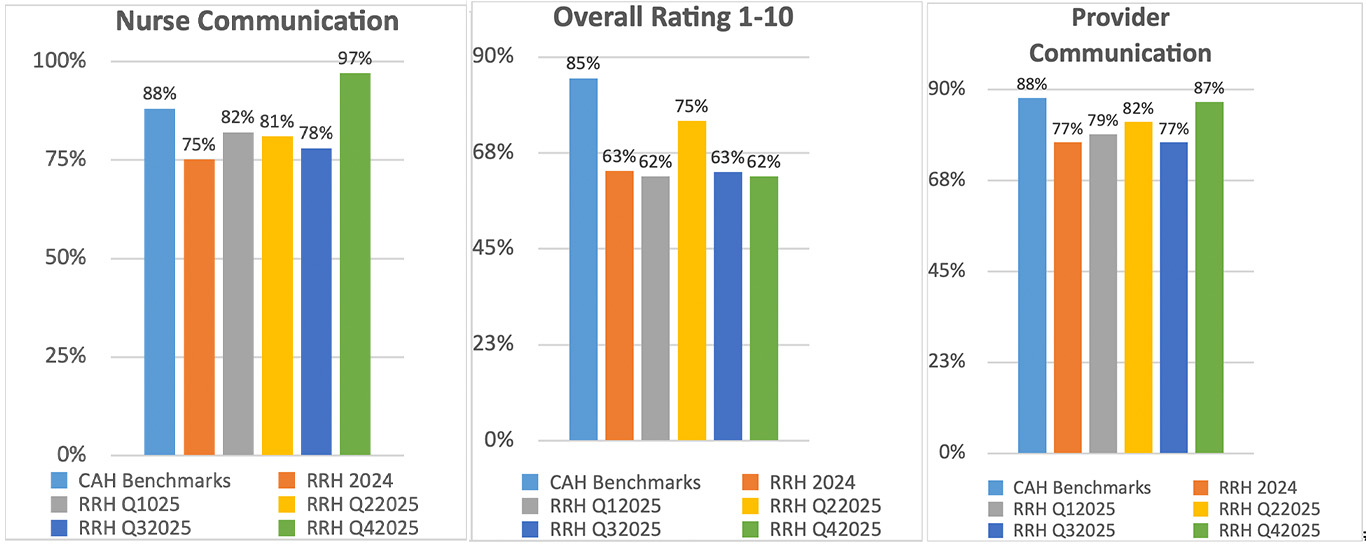
- How well do nurses communicate? For 4th Quarter of 2025 97% of Ridgecrest Regional Hospital patients say their nurses communicated well, 82% of patients in other Critical Access hospitals say their nurses communicated well.
- How well do providers communicate? For 2nd Quarter 87% of Ridgecrest Regional Hospital patients say their providers communicated well, 80% of patients in other Critical Access Hospitals say their providers communicated well.
- How likely are patients to recommend their hospital? 100% of Ridgecrest Regional Hospital patients would recommend their hospital. 79% of patients in other Critical Access hospitals would recommend their hospital.

When you receive treatment from a medical provider, you expect that care to be successful so that you can get back to living. Sometimes you need follow-up treatment. For patients who choose Ridgecrest Regional Hospital, how effective is the care they receive? These are key figures we monitor to keep you and your family safe and make your care even better.
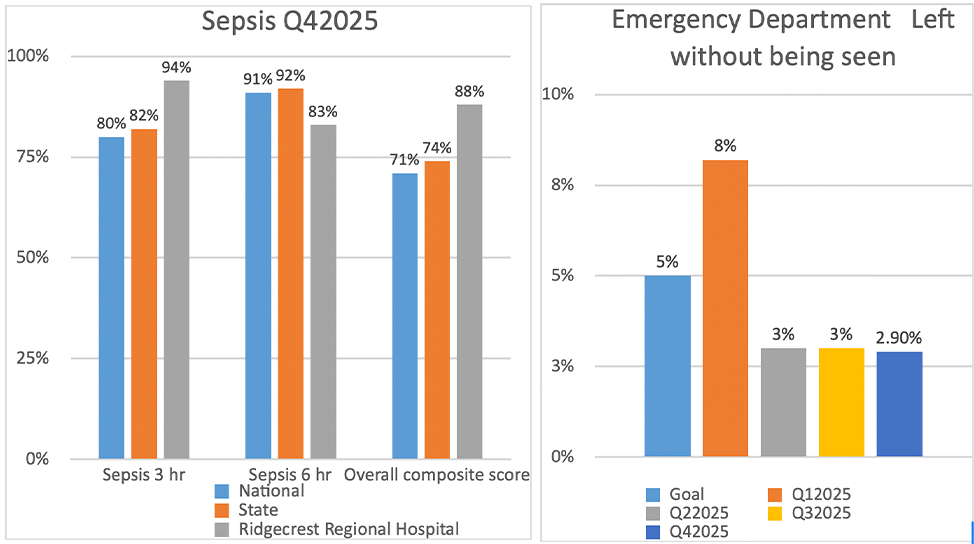
- Sepsis is a serious medical condition and a leading cause of death in hospitals. At Ridgecrest Regional Hospital, we have developed a sepsis program that is critical to monitoring and improving the management and outcomes of our patients with Sepsis. Quality improvement programs with a focus on Sepsis have been associated with a reduction in hospital mortality, length of stays, and decreased health care costs.
- Left without being seen (LWBS) refers to a patient who leaves the Emergency Department before being seen by a provider. Patients who leave without being seen represent quality and safety concerns . Ridgecrest Regional Hospital has been working diligently to reduce our LWBS percentage to increase patient satisfaction and reduce quality and safety concerns.
For questions or comments on information listed above, contact: